Air Force One is much more than a cool gadget or political flashpoint
Air Force One is a symbol of presidential power, but its problems only reinforce the fact that technology shapes the presidency
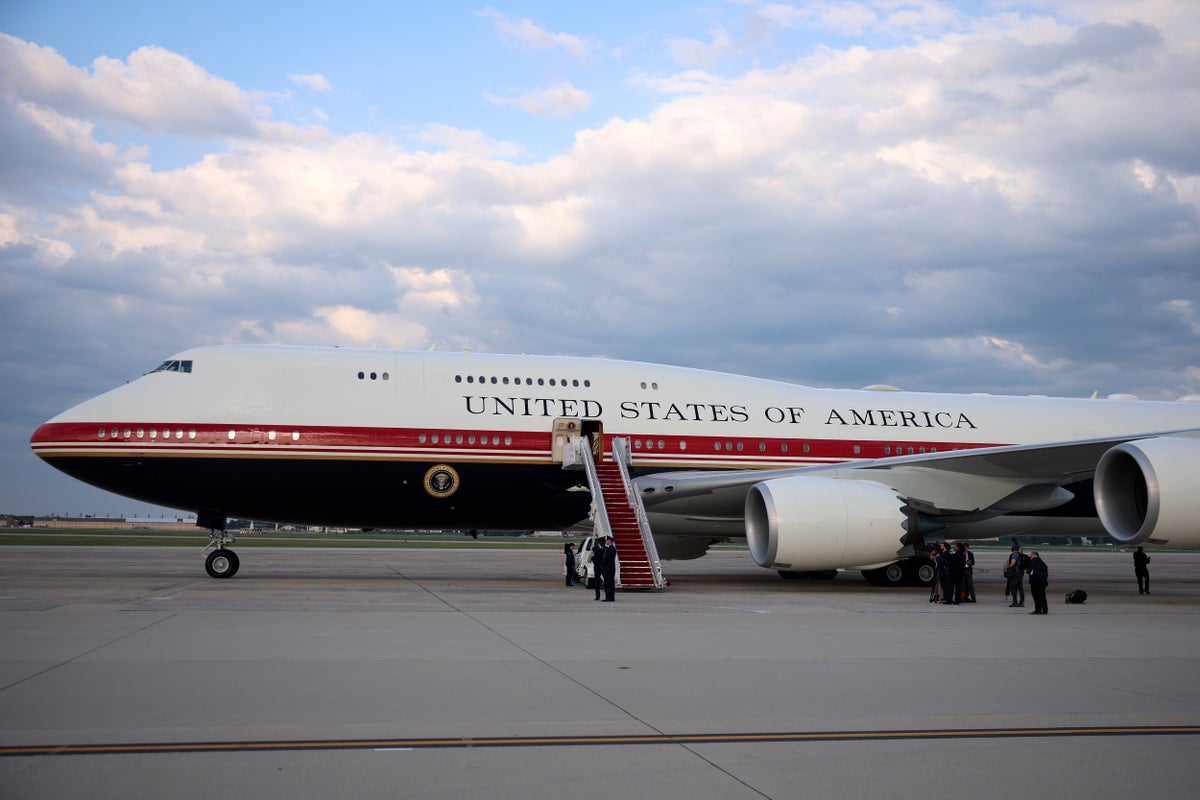
Air Force One used to be a high-flying symbol of American technology, ingenuity and power. For many, it was also a source of national pride.The current Boeing 747s that serve as Air Force One are a combination transport vehicle, command center, press room, medical center and apartment, complete with bedroom and office for the nation’s chief executive.
Now, to many, Air Force One has become scandalous.On July 8, 2026, The New York Times reported that the latest version of the presidential aircraft – presented by Qatar as a gift to President Donald Trump – lacks the sophisticated countermeasures that were a ready defense for the 747s that had been in service since 1990. Critics immediately revived earlier claims that the new 747 was a corrupt transaction from the start.
Trump later said the plane would be sent to be “maxed out” with upgrades.This article is not part of that story. Nor is it the standard story of Air Force One that appears in numerous documentaries, which tend to be gee-whiz accounts of the amazing capacities of the president’s airplane.
Air Force One is visible on the tarmac before U.S. President Donald Trump arrives for a trip to Michigan on July 27, 2026 in Joint Base Andrews, Maryland.
Trump is scheduled to tour General Motors' Milford Proving Ground while in Michigan (Getty Images)I am a historian writing a book about the technologies that have shaped the long history of the American presidency, in which Air Force One looms large. I believe it is important to see Air Force One as more than a cool gadget or political flash point. Von Hardesty, a curator at the Smithsonian’s National Air and Space Museum, certainly understood this when he wrote that “by the end of the 20th century, Air Force One had evolved into an essential arm of the American Presidency.”
Put simply, the presidency as we know it today would have been impossible without Air Force One, which has shaped and defined that role for decades.Horse-drawn carriage to the ‘Sacred Cow’It was only recently that Americans or their presidents could imagine things this way. When presidents left the capital throughout most of the nation’s history, it was a lengthy, at times arduous, process that severed their connection with government offices.
As a result, presidents rarely traveled while in office and were more likely to depart Washington for extended vacations than for official business. Likewise, no serving president left the United States until Teddy Roosevelt visited the construction of the Panama Canal in 1906. Woodrow Wilson became the first sitting president to cross the Atlantic when he boarded the USS George Washington in 1918 to join the negotiations in Versailles at the end of World War I.
If few presidents got away from Washington to see the country and its residents before 1900, the flip side was also true: Few Americans saw presidential candidates or incumbents in person, especially Americans who lived outside the eastern third of the United States. Instead, the connection between presidents and average citizens was mediated through political parties, the press and eventually through broadcast media.The first designated presidential aircraft arrived in 1933, but Franklin Roosevelt never flew on it.
His first flight as president came in 1943, when American Airlines loaned a flying boat called the Dixie Clipper to ferry Roosevelt to meet with other Allied leaders at the Casablanca Conference. In 1945, Roosevelt traveled to Yalta on a Douglas VC-54C called the Sacred Cow, the first plane specifically built for presidential travel.Despite these flights to important international meetings, Roosevelt and successors Harry Truman and Dwight Eisenhower made limited domestic use of aircraft, preferring instead to travel by railroad.
International trips remained lengthy journeys in loud, propeller-driven aircraft that encountered the greater turbulence of lower altitudes.About the authorPeter Kastor is a Professor of History & American Culture Studies, Washington University in St. Louis.
This article was first published by The Conversation and is republished under a Creative Commons licence. Read the original article .All this changed in 1962, when President John Kennedy acquired a brand-new Boeing 707, the first jet-powered Air Force One.
Presidential ubiquityFlying higher, faster and quieter than their predecessors, the jet aircraft used for Air Force One made possible one of the central facets of the modern presidency: The nation’s chief executive could be a ubiquitous player in national politics and world affairs.Presidential travel increased dramatically, both in its frequency and in the number of stops on each trip. This was not simply the result of the growing use of air travel worldwide.
Where Roosevelt, Truman and Eisenhower understood world leadership as their ability to coordinate American power from Washington, Kennedy and his successors sought to make themselves the center of the story.This seemed particularly important during
Đọc thêm từ Thế giới
US singer D4vd to go on trial for murder in death of teen
The star is accused of killing Celeste Rivas Hernandez, whose remains were found in a Tesla registered to his address.

Da alle andre flyktet, løp de mot flammene. – Det var ingen tvil om det.
BORDEAUX/OSLO: De ble igjen da skogen brant. Nå kjemper de mot nye oppblussinger.

トランプ大統領 “金利引き下げられるべき” FRB会合前に圧力
トランプ大統領は27日、記者団に対し、「金利は引き下げられるべきだ」などと主張しました。FRB=連邦準備制度理事会が28日から開く金融政策を決める会合を前に、FRBに対して改めて利下げを行うよう圧力をかけた形です。