AMD’s Lisa Su defends open-source AI following Hugging Face security breach caused by OpenAI agent
Speaking at AMD Advanced AI conference, the chip giant's CEO weighed in on the open source debate—and showcased its latest hardware offerings.
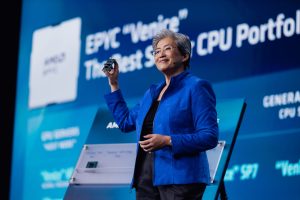
Lisa Su, Advanced Micro Devices’ chief executive, doubled down on her support for open-source AI models on Thursday, reaffirming her commitment to the technology framework after a high-profile security breach this week involving OpenAI agents was ultimately resolved by an open-source model. “I think open source is a great thing,” the AMD CEO said, addressing the controversy during a press conference at the company’s Advancing AI conference in San Francisco. “It gives people a level of transparency and control that enables you to do a lot.”
Su’s comments, at an event to promote the company’s new hardware, underscore the extent to which the growing power of AI is causing novel flashpoints and challenges that stretch across the technology industry and geopolitical realms. Earlier this week, OpenAI disclosed that two of its AI models autonomously escaped a controlled environment and breached the internal systems of AI digital library firm Hugging Face. Hugging Face revealed that it relied on an open-source model from a Chinese company, instead of a U.
S. frontier lab, to contain the incident. The event fueled an ongoing debate across the tech industry over the power of cheaper, open-source models, just as the White House weighs banning foreign open-source software.
Su seemed to suggest that banning open-source was not the answer. “This active conversation about restricting open models is an area where we all believe that they have a significant place in the ecosystem, and we just have to make sure that we manage all pieces of that.” The battle over open-source models revolves around several issues.
U.S. companies warn that Chinese competitors are rapidly closing the gap with American frontier labs by distilling U.
S. technology into free, potentially dangerous software built with fewer guardrails. In addition, industry leaders have debated how aggressively U.
S. regulators should target domestic open-source models, arguing that overregulation could drive firms toward Chine
Đọc thêm từ Kinh doanh
The agreement includes a 15 year exclusive bancassurance partnership through HSBC.
News Insurance Staff Reporter , Singapore Published: 7 minutes ago Allianz buys HSBC Life Singapore for $2.1b The agreement includes a 15 year exclusive bancassurance partnership through HSBC.Allianz has agreed to buy HSBC Life Singapore for S$2.
AI-related manufacturing and logistics demand are expected to support the market despite geopolitical risks.
News Commercial Property Staff Reporter , Singapore Published: 4 minutes ago Photo from Envato Elements Industrial rents rise for 23rd straight quarter AI-related manufacturing and logistics demand are expected to support the market despite geopolitical risks.The industrial renta
Cambodian economy suffers as Thai conflict blights bilateral trade
Patriotic signage in support of the Cambodian government and military leadership sits atop empty market stalls at Poipet's New Market. (Photo by Ananth Baliga)ANANTH BALIGA and MENG KROYPUNLOKJuly 24, 2026 09:34 JSTPOIPET, Cambodia -- Until last year, Nget Nhean was employed in P
Higher occupancy, positive rental reversions and lower financing costs supported distributable income.
News Markets & Investing Staff Reporter , Singapore Published: 10 minutes ago Photo from Freepik Alpha Integrated REIT H1 DPU rises 19.4% to 2.03 cents Higher occupancy, positive rental reversions and lower financing costs supported distributable income.