An orange wave is breaking over Victoria. Can Labor hold back the populist tide?
No matter who emerges from Labor’s leadership contest, the victor will have to prepare to fight One Nation. This feature has been republished following Jacinta Allan’s colleagues turning against her.

AdvertisementSaveYou have reached your maximum number of saved items.Remove items from your saved list to add more.ShareAAAThe hard men and women of the union movement gathered at a conference centre on the edge of Melbourne didn’t entirely believe what they were being told.
Kos Samaras, a former Labor Party organiser turned pollster and political consultant, was on his feet, explaining how One Nation, a party which had never won a lower house seat in Victoria, was on track to snatch a dozen at the next state election. In some Labor-held electorates, Pauline Hanson’s lot was Hoovering up 30 per cent of the vote.The room was not entirely convinced.
Any union secretary worth their salt knows the mood on the factory floor, in the smoko room, around the teachers’ staff room. They weren’t picking up what Samaras was telling them.One Nation leader Pauline Hanson at a fundraiser in Melbourne on Friday night.
Simon SchluterAs it turns out, they were right to be sceptical. Samaras didn’t know the half of it.The setting was the annual strategic forum of Victorian Trades Hall Council, the state’s peak body for trade unions, at a venue in Chirnside Park.
The date was March, after One Nation had flexed in South Australia, but before Hanson’s party reduced the Liberal and National parties to bit players in the Farrer byelection. What seemed an alarming prediction now appears a gross underestimation of where One Nation is heading.“People thought that 12 seats was maybe a stretch,” Trades Hall secretary Luke Hilakari recalls of the forum.
“Now I’m looking at numbers like it could be 30 seats.”AdvertisementTo put this into context, the Liberal and National parties currently hold 29 seats in Victoria’s Legislative Assembly (lower house). If the revised projections commissioned by Trades Hall are accurate, One Nation will in November become the second-largest party in parliament behind Labor, and the dominant coalition partner within any non-Labor government.
As dramatic as this outcome would be, it is only part of the seismic shift we are seeing in Victoria, one mirrored in Donald Trump’s America, in Nigel Farage’s UK and across Western Europe, where populist movements have either replaced or decimated traditional centre-right parties.The Victorian election, the first since One Nation overtook both major parties in popularity, could also produce the next step in Australia’s political upheaval – the emergence of an anti-establishment force capable of taking ground from both the right and the left, and muscling its way onto the government benches.Jim Reed, founder of the Resolve Political Monitor surveys published by The Age, says One Nation has morphed from a protest movement into an agent of change that voters from a broad range of demographics are approaching with positive intent.
“The polls are showing One Nation stealing votes from both major parties, not just the right,” he says. Reed’s next survey of Victorian voting intentions will be published on Monday.Federal One Nation MP Barnaby Joyce declared to 3AW on Friday that his party was now a force that both sides of politics needed to reckon with.
Advertisement“The movement’s on. It’s not an aberration,” he said.When seen this way, the November 28 poll is less a contest between Labor and Liberal than an insider-outsider stoush in which Labor’s biggest fight is against One Nation, the Coalition’s greatest rival is One Nation, and the make-up of parliament will be decided by a kaleidoscope of contests – red versus blue versus orange, not to mention green and teal.
A Labor versus Liberal fight for a marginal, mortgage belt seat will seem almost quaint.Back in March, the union leaders left Chirnside Park with another piece of work commissioned by Trades Hall: a 67-page thesis developed by a clever young researcher named Oscar Kaspi-Crutchett, about how the left should fight the far right. Simply titled Antidote, it presents the case that while right-wing populism often begins as a glitch in the centre-right matrix, its “path to power leads through the working class”.
This is where the broader labour movement, including the Victorian ALP and the Allan government, wants to take the fight ahead of the election. While the Spring Street echo chamber is preoccupied with speculation about a challenge to Jacinta Allan’s leadership, Hilakari knows Labor faces far bigger questions.“This is the most progressive state in the nation,” he says.
“If One Nation plants their flag here in Victoria, they’re every chance to sweep the nation. This is where the fight is. This is the battleground.
If we can’t push them out of Victoria, what’s that going to be like for Queensland, NSW and then the federal election?Advertisement“We’re running against Pauline Hanson.”Allan this week sought to reframe the contest and sharpen her party’s focus and response to One Nation’s electoral threat.
On a crisp winter’s day, she found an hour to slip out of her Treasury Place office, walk with this masthead around Fitzr
Đọc thêm từ Thế giới

비수도권 해양기업 성장 이끌 ‘바다생활권 특화펀드’ 첫 출범
본문전국영남비수도권 해양기업 성장 이끌 ‘바다생활권 특화펀드’ 첫 출범김영동기자수정 2026-07-27 13:20펼침0:00Your browser does not support theaudio element.구글 선호 매체 등록지난해 12월 부산 동구 수정동 해양수산부 임시청사에서 열린 해수부 현판 제막식 모습. 한겨레 자료사진광고해양수산부는 27일 “올해 215억원을 시작으로 2030년까지 1428억원 규모의 바다생활권 특화펀드를 조성해 본격 투자에 나선다”고 밝혔다.

Dalaroo set for 20,000m West African gold drill
Dalaroo Metals is set to launch into a 20,000m maiden drill campaign at its Bondoukou gold project in Côte d’Ivoire, with the drill rods to spin in early August.
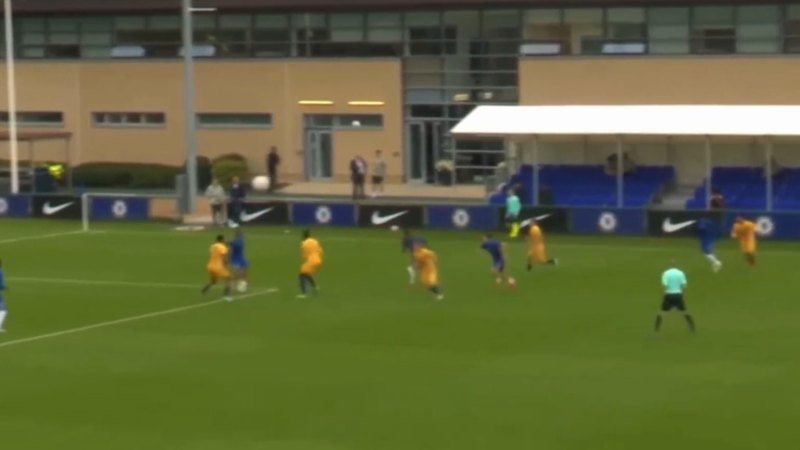
Sydney-born gun in Chelsea squad
Sydney-born Mahdi Nicoll-Jazuli in action for Chelsea's under-18 team.

인천 영종∼장봉도 여객선 내달부터 신도 경유 중단…직항 추진
(인천=연합뉴스) 황정환 기자 = 인천 영종도와 옹진군 장봉도를 운항하는 여객선과 도선이 다음 달부터 북도면 신도를 경유하지 않고 직항으로 운항...