Are we overlooking signs of alien life that aren't technological or biological? 'Bread would be a signature of intelligence'
Between biosignatures and technosignatures lie noosignatures, and some scientists think they could help us find alien life someday.
Skip to main content 5Premium benefits 24/7Access available 23K+Active Members Expert insights In-depth guides and features Curated newsletters Handpicked inspiration Early Access Preview new releases first Achievements Earn badges as you explore Join the conversation Comment and connect Tailored for you Personalised recommendations Get Space+ Access Quick For the quickest way to join, enter your email below. We’ll send a confirmation email and sign you up to Space.com newsletters with the latest inspiration, expert advice and exclusive offers.
Contact me with news and offers from other Future brands By submitting your information you agree to the Terms & Conditions and Privacy Policy and are aged 16 or over. FIND OUT ABOUT OUR MAGAZINE Want to subscribe to the magazine? Click the button below to find out more information.
Find out more 5Premium benefits 24/7Access available 23K+Active Members Expert insights In-depth guides and features Curated newsletters Handpicked inspiration Early Access Preview new releases first Achievements Earn badges as you explore Join the conversation Comment and connect Tailored for you Personalised recommendations Get Space+ Access Quick For the quickest way to join, enter your email below. We’ll send a confirmation email and sign you up to Space.com newsletters with the latest inspiration, expert advice and exclusive offers.
Contact me with news and offers from other Future brands By submitting your information you agree to the Terms & Conditions and Privacy Policy and are aged 16 or over. FIND OUT ABOUT OUR MAGAZINE Want to subscribe to the magazine? Click the button below to find out more information.
Find out more Get Space+ Access Quick Join The Club for quick access. Enter your email below and we'll send confirmation, and sign you up to our newsletter. Contact me with news and offers from other Future brands Sign Up By submitting your information, you confirm you are aged 16 or over, have read our Privacy Policy and agree to the Terms & Conditions.
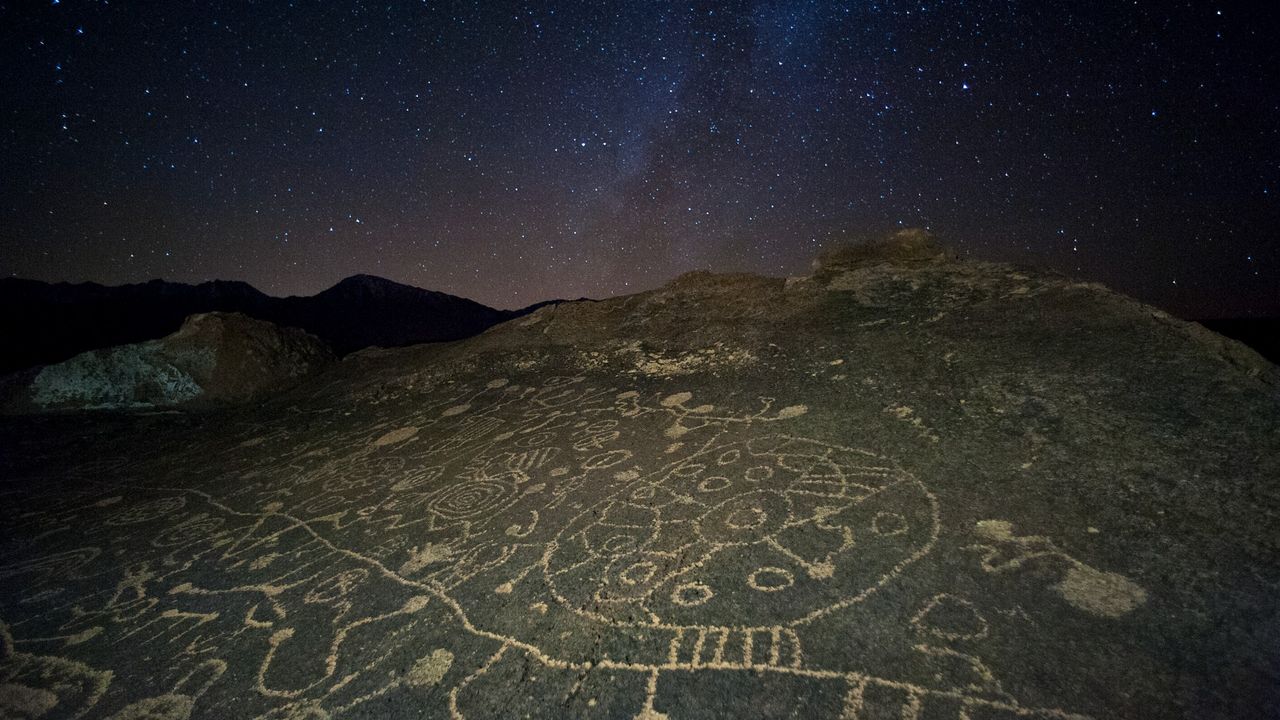
Geographical rules apply. Click for next article Between biosignatures and technosignatures lie noosignatures, and some scientists think they could help us find alien life someday. (Image credit: Tony Rowell/Getty Images) Copy link Facebook X Whatsapp Reddit Pinterest Flipboard Email Share this article 0 Join the conversation Follow us Add us as a preferred source on Google Newsletter Subscribe to our newsletter The search for alien life has tended to focus on looking for either signs of extraterrestrial technology or evidence of biological processes on other worlds.
But new and ongoing research suggests that scientists should start considering signs of intelligence that are not necessarily technological, but which are sufficiently complex as to be evidence of a conscious mind at work.Biosignatures are possible signs of biology on other planets, whereas technosignatures are clues to the presence of advanced technology that might be detectable across light-years. What, though, of everything that comes between these two extremes?
How do we detect life that is more complex than simple microbes and which displays intelligence that is not highly technological?This is where the field of noosemiotics comes in, says Julia DeMarines, an American astrobiologist who has been involved in both biosignature and technosignature research. "We want to figure out if we can detect signatures of intelligence that occur before the invention of radio communication," DeMarines told Space.
com. "We're looking at the ways that mind can be imprinted on matter."Noosemiotics is derived from the Ancient Greek concept of 'nous', which refers to the theory of mind.
In the 1920s the Soviet biochemist Vladimir and the French Jesuit priest Pierre Teilhard de Chardin developed the idea of the noosphere as being the sphere of human reason or thought encapsulating the Earth.More recently, Adam Frank, David Grinspoon and Sara Imari Walker applied the noosphere to SETI by considering the collective intelligence of all the beings on a planet acting as a kind of combined planetary scale intelligence.Therefore, according to DeMarines, a noosignature would be a sign of a noosphere, of conscious minds at work."
Bread doesn't just pop out of a molecular cloud"Technology is, of course, a major imprint of mind on matter, and DeMarines acknowledges that just as technosignatures can be biosignatures since they can originate from biological entities, they can also be noosignatures — for instance, gases such as nitrogen released into the atmosphere by agricultural practices. But noosignatures can be something other than biosignatures and technosignatures, too.Which is where DeMarines’ work comes in.
She had been working for a company who were looking to apply the concept of Assembly Theory, which is a chemistry theory originated by Sara Walker and Glasgow-based chemist Lee Cronin, to online data and artificial intelligence to search for thresholds that denote complex signatures
Đọc thêm từ Khoa học

New research turns the Dunning-Kruger effect on its head: Rethinking the confident incompetent
Researchers at the University of Bath and The London School of Economics and Political Science (LSE) suggest that the celebrated Dunning-Kruger effect, often taken to mean the least competent people are the most overconfident, may actually be the wrong way around.

Astronomers identify one of the universe's rarest black hole events
A team of astronomers at the University of North Carolina at Chapel Hill has observed an extremely rare "wandering" black hole located tens of thousands of light-years from the center of its galaxy. This finding could reshape scientists' understanding of how massive black holes m

Can a newly discovered soil fungus stop the devastating African armyworm when chemicals have failed?
The African armyworm is a highly destructive migratory pest that damages maize, sorghum, millet and sugarcane. These caterpillars also cause indirect damage to livestock by destroying grazing lands and pastures.

Highly tunable electro-optic isolator achieves one-way light flow on photonic chips
Integrated photonic devices—tiny circuits that use light instead of electrons—are becoming increasingly important for scalable photonics technologies and high-bandwidth communications. They are particularly valuable for managing low-power, light-based data transfer inside data ce