Hands-Free Mouse Uses Eyes And Muscles Instead
The standard computer mouse is a perfectly useful peripheral if your hands work. If you’ve got some trouble in that area, you might appreciate an alternative input solution. To that end, [Varun …read more
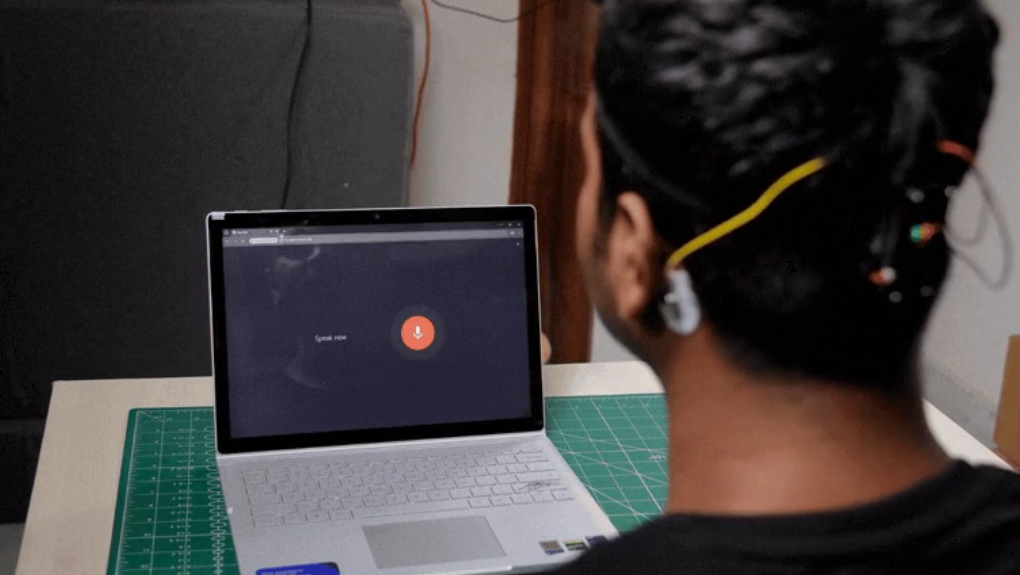
The standard computer mouse is a perfectly useful peripheral if your hands work. If you’ve got some trouble in that area, you might appreciate an alternative input solution. To that end, [Varun Adinath Patil] created a neat hands-free solution for moving a cursor around a screen.
The build is based on the Neuro PlayGround Lite, a board built for physiological signal acquisition in the Feather form factor. It’s hooked up to an IMU sensor—both a MPU6050 or BMI270 work—which tracks head movements to allow the cursor to be panned around the screen. Other biological signals are then used to activate other standard mouse functions.
Clenching the jaw fires off a left click, while a triple blink fires a right click. Clicking and dragging is achieved by a double-blink. The jaw muscles are sensed via EMG signals picked up with gel electrodes on the skin, while the blinks are detected via EOG signals via the same contact points.
Commercial solutions in this realm exist, but it’s great to see how such a device can be built from the ground up. We’ve looked at other neat applications of head-tracking before, too. If you’re working on your own innovative accessibility tools, don’t hesitate to let us know via the tipsline.
Đọc thêm từ Công nghệ

Prise en main Samsung Galaxy Z Flip8 : rendez-vous manqué
Le dernier smartphone pliable sous format clapet de la marque bénéficie d'une amélioration bienvenue au niveau de la batterie, mais c'est à peu près tout…

【テスラ】国内のNACS対応急速充電器が累計1,000台を突破〜スーパーチャージャー752台・「FLASH」250台
テンフィールズファクトリーが、日本国内で稼働するNACS対応急速充電器が累計1,002台・345箇所に到達した、と発表しました。 NACS急速充電の設置状況 「NACS(North American Charging S […]©2019 "Touch Lab - タッチ ラボ".

Report: Apple and Micron clash before Trump over Chinese memory chips
The Wall Street Journal reports that Micron is pressing the Trump administration to block Apple’s push to use memory chips from Chinese suppliers. Here are the details.

Who’s investing in India’s SaaS startups?
We've compiled a list of investors pouring money into India’s SaaS startups.