Iran and Oman negotiate to restart shipping through the Strait of Hormuz, easing pressure on Bitcoin and risk assets
Renewed shipping through Hormuz could stabilize energy markets, reducing volatility in Bitcoin and risk assets, impacting global investment strategies. The post Iran and Oman negotiate to restart shipping through the Strait of Hormuz, easing pressure on Bitcoin and risk assets ap
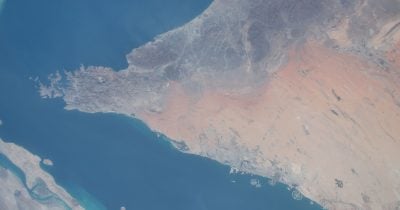
Via commons.wikimedia.org Iran and Oman negotiate to restart shipping through the Strait of Hormuz, easing pressure on Bitcoin and risk assets Diplomatic talks aim to restore traffic through the world's most critical oil chokepoint, and crypto markets are already responding Share Add us on Google by Editorial Team Jul.
27, 2026 Iran and Oman are in active negotiations to restart commercial shipping through the Strait of Hormuz, the narrow waterway that historically carries roughly 20 million barrels of oil per day. That’s about a fifth of the world’s daily petroleum consumption flowing through a passage barely 21 miles wide at its narrowest point. The talks are focused on establishing traffic management protocols and implementing transit fees categorized under navigational and environmental charges.
Revenue from those fees would reportedly be directed toward local reconstruction efforts, giving both nations a financial incentive to keep the channel open and orderly. Why a shipping lane matters to your Bitcoin portfolio Bitcoin has increasingly behaved like a macro risk asset, and few macro variables move markets like energy supply disruptions. When shipping through Hormuz ground to a near-standstill earlier in 2026 due to escalating US-Iran hostilities, oil prices spiked and risk assets, Bitcoin included, took a beating.
Advertisement The Iran-Oman coordination on traffic management has already helped calm some of those market fears. Bitcoin has recovered from its earlier losses in part because traders see diplomatic engagement as a signal that the worst-case scenario, a prolonged total blockade, is becoming less likely. No other major cryptocurrency has been significantly mentioned in market responses to these Hormuz developments.
Bitcoin remains the proxy through which geopolitical risk gets priced into the crypto market. The geopolitical chess match Oman has long positioned itself as the Gulf’s quiet diplomat, maintaining working relationships with both Tehran and Washington. It brokered back-channel communications during previous rounds of US-Iran nuclear negotiations, and its geographic position on the southern shore of the strait makes it a natural partner for any traffic management scheme.
A fragile ceasefire between the US and Iran is holding. The disruptions that choked Hormuz traffic earlier in 2026 were a direct consequence of escalating hostilities, and the underlying tensions haven’t disappeared just because diplomats are talking about shipping lanes. The US and UK are reportedly planning an international conference in late July 2026 focused specifically on the security and stabilization of Hormuz shipping routes.
The transit fee structure being discussed is framed as “navigational and environmental” rather than purely economic, giving Iran a face-saving mechanism to collect revenue without appearing to capitulate to international pressure, while shipping companies get a predictable cost structure they can plan around. What this means for investors For traders with shorter time horizons, the key metric to monitor is actual vessel traffic through the strait. Diplomatic statements are encouraging, but the market will ultimately price in what ships actually do, not what negotiators say they’ll do.
Disclosure: This article was edited by Editorial Team. For more information on how we create and review content, see our Editorial Policy. MACRO Iran and Oman negotiate to restart shipping through the Strait of Hormuz, easing pressure on Bitcoin and risk assets Diplomatic talks aim to restore traffic through the world's most critical oil chokepoint, and crypto markets are already responding by Editorial Team Jul.
27, 2026 Share Add us on Google Via commons.wikimedia.org Iran and Oman are in active negotiations to restart commercial shipping through the Strait of Hormuz, the narrow waterway that historically carries roughly 20 million barrels of oil per day.
That’s about a fifth of the world’s daily petroleum consumption flowing through a passage barely 21 miles wide at its narrowest point. The talks are focused on establishing traffic management protocols and implementing transit fees categorized under navigational and environmental charges. Revenue from those fees would reportedly be directed toward local reconstruction efforts, giving both nations a financial incentive to keep the channel open and orderly.
Why a shipping lane matters to your Bitcoin portfolio Bitcoin has increasingly behaved like a macro risk asset, and few macro variables move markets like energy supply disruptions. When shipping through Hormuz ground to a near-standstill earlier in 2026 due to escalating US-Iran hostilities, oil prices spiked and risk assets, Bitcoin included, took a beating. Advertisement The Iran-Oman coordination on traffic management has already helped calm some of those market fears.
Bitcoin has recovered from its earlier losses in part because traders see diplomatic engagement as a signal that the worst-case sc
Đọc thêm từ Tiền số / Crypto

NFL urges CFTC to strengthen rules on sports prediction markets: report
The NFL responded to the CFTC’s recent draft rulemaking calling for stricter prediction markets oversight, including age restrictions.

Apple reclaims world’s biggest market cap at $4.9T, surpasses Nvidia
Apple's regained market cap dominance signals shifting investor confidence, potentially impacting tech sector dynamics and competitive strategies. The post Apple reclaims world’s biggest market cap at $4.9T, surpasses Nvidia appeared first on Crypto Briefing.
Franklin Templeton Joins Blackrock, Fidelity, Goldman Sachs in Backing CLARITY Act
Franklin Templeton has joined Blackrock, Fidelity, and Goldman Sachs in supporting the CLARITY Act, strengthening Wall Street’s push for federal crypto rules as senators review updated legislation before a potential floor vote. Franklin Templeton Adds to Wall Street’s CLARITY Act

Meta, Microsoft earnings loom as AI-related bond cracks emerge
Investor caution in AI-related bonds could pressure Big Tech's spending, impacting the broader tech supply chain and market sentiment. The post Meta, Microsoft earnings loom as AI-related bond cracks emerge appeared first on Crypto Briefing.