Nvidia is using OpenAI’s Ilya Sutskever to loosen Google’s grip on elite AI research
Nvidia (NASDAQ: NVDA) is putting money and hardware behind Safe Superintelligence, the lab started by former OpenAI chief scientist Ilya Sutskever. The deal gives Ilya more access to Nvidia’s graphics chips and cuts the lab’s earlier dependence on processors from Alphabet’s Googl

Nvidia (NASDAQ: NVDA) is putting money and hardware behind Safe Superintelligence, the lab started by former OpenAI chief scientist Ilya Sutskever. The deal gives Ilya more access to Nvidia’s graphics chips and cuts the lab’s earlier dependence on processors from Alphabet’s Google (NASDAQ: GOOGL). Nvidia called the funding “substantial,” but neither side shared the amount.
The company agreed after reviewing work that Safe Superintelligence has kept mostly hidden. Financial terms remain private, and neither company gave a timeline for hardware deliveries. The companies said the hardware could multiply the startup’s computing capacity by an “order of magnitude.”
Safe Superintelligence had primarily trained its systems with Google’s tensor processing units, or TPUs. It will now add a lot of Nvidia GPUs, which are used for huge AI training sessions. The deal also gives Nvidia another high-profile research customer as chip companies compete for future demand.
Nvidia brings another former OpenAI leader onto its hardware platform Nvidia used a similar deal in March with Mira Murati, OpenAI’s former technology chief. Mira co-founded Thinking Machines Lab in 2025. Nvidia invested in that company in March, and Thinking Machines released its first model this month using Nvidia chips.
Safe Superintelligence was formed in 2024. Ilya built the company around one goal: creating what he calls “safe superintelligence.” That means AI able to do anything humans can do without endangering them.
Its plan is a “straight-shot” research effort rather than a normal product schedule filled with public releases. Safe Superintelligence raised about $2 billion from firms including Andreessen Horowitz and Sequoia Capital. By late last year, the business had reached a valuation of around $30 billion without providing a public model or specific product strategy.
Its price was primarily based on Ilya’s reputation and previous work at OpenAI. The lab has kept nearly all technical details private. Il
Đọc thêm từ Tiền số / Crypto
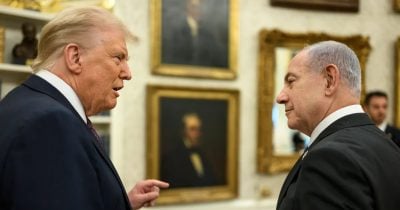
Netanyahu in US for talks as Trump describes Iran discussions as ‘friendly’
Netanyahu's visit may catalyze diplomatic efforts, potentially easing tensions and fostering a conducive environment for future peace talks. The post Netanyahu in US for talks as Trump describes Iran discussions as ‘friendly’ appeared first on Crypto Briefing.
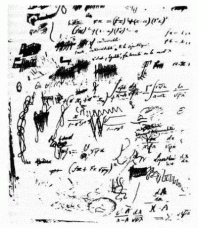
AI cracks second FrontierMath benchmark problem on absolute Galois groups, signaling a shift for computational research
AI's success in solving complex math problems may accelerate advancements in computational research, reshaping future problem-solving approaches. The post AI cracks second FrontierMath benchmark problem on absolute Galois groups, signaling a shift for computational research appea
Dragonfly partner warns crypto VC could face extinction by 2030
The potential decline of crypto VC by 2030 could shift investment focus to AI, stablecoins, and fintech, impacting early-stage crypto innovation. The post Dragonfly partner warns crypto VC could face extinction by 2030 appeared first on Crypto Briefing.
Kakao Pay Taps Nasdaq’s Siebert to Bring Tokenized Korean Stocks to Wall Street
Siebert Financial Corp. has agreed to become the U.S. partner for Kakao Pay Securities in a plan to bring South Korean stocks to American investors outside normal market hours. The companies announced the partnership on Monday under the name K-Stock Global Gateway. It combines Si