OpenAI vs ANI case: what it means for the future of information
The Delhi High Court order is the first detailed attempt by an Indian court to place AI training within the Copyright Act.

News agency Asian News International (ANI) sued AI research firm OpenAI in November 2024 for using its content to train ChatGPT without permission or payment. The generative-AI model allegedly hallucinated quotes and reports, wrongly attributing to the agency. The ANI, in its plea in Delhi High Court, has sought ₹2 crore in damages and an order barring OpenAI from using its work.
On July 24, 2026, Justice Amit Bansal ruled that storing ANI’s articles to train ChatGPT falls under Section 52 of India’s Copyright Act, which exempts private use and research from infringement. The judgment noted that ANI failed to show that ChatGPT reproduced or “memorised” its actual reporting, hence there was no infringement.The 135-page order is the first detailed attempt by an Indian court to place AI training within the Copyright Act.
It is an interim order, though, and ANI can appeal.The sticking pointAt the heart of these disputes lies fair use (in the U.S.)
or fair dealing (in India and the UK).Wire services such as PTI, ANI, Reuters, AP, and AFP license verified facts to other outlets, which rewrite them in their own style. The business depends on readers trusting that the wire got the facts right, and on the wire being paid for the work of verifying them.
A search engine sends a reader back to the original story but an LLM takes the fact, drops the sourcing and verification behind it, and returns an answer with no byline.AI companies argumentCopyright holders counterCopying materials for training models is research and analysis, not a substitute for the originals.Training involves massive, systematic copying of entire works, often scraped without consent.
Models don’t store or reproduce works in full; they learn patterns and statistics, then produce new outputs.AI systems can and do reproduce substantial parts of those works, sometimes verbatim.This transformation should qualify as fair use.
This undermines the market for the originals and hurt creators’ ability to earn a living.Does training a model with pirated material come under fair use in US?In August 2025, Anthropic agreed to pay $1.
5 billion to settle a class action brought by authors after the company downloaded more than seven million pirated books from shadow libraries such as Library Genesis to train its Claude models. In 2026, a federal judge gave the settlement final approval which was incidentally the largest copyright class-action payout in American history, at roughly $3,000 per book across nearly 500,000 titles.Judge William Alsup, who oversaw the case before it settled, had already ruled that training AI on legally acquired books was fair use.
It was the piracy (that is downloading books from illegal sites rather than buying them) that got Anthropic into trouble.Two days after Alsup’s ruling, a California judge, Vince Chhabria, found that Meta’s use of books, including pirated ones, to train its Llama models was fair use on the facts before him. But he told the losing authors how they should have argued the case: most unauthorised AI training, he wrote, will probably prove illegal, because it risks “market dilution”: flooding the market with AI-generated books, music, and articles that compete with the human-made originals the AI learned from.
It doesn’t matter if the output looks nothing like the input; if the effect is a machine that can produce infinite competing content in seconds, the market for the original work is destroyed regardless.The New York Times’ case against OpenAI and Microsoft, filed in December 2023, still grinds through discovery in Manhattan, with no trial date set. However, the court had ordered OpenAI to preserve and eventually hand over 20 million anonymised ChatGPT conversation logs, which a magistrate judge upheld earlier this year over OpenAI’s privacy objections.
Whatever the court eventually rules on the core question will likely shape how every subsequent US news-industry case is argued, ANI’s included.Training a model with copyright content: intent and consent mattersGetty filed a plea against Stability AI in High Court of England and Wales in January 2023 over its use of millions of Getty photographs, some with visible watermarks intact,to train the Stable Diffusion image generator. By the time the case reached judgment in November 2025, Getty had abandoned its central claim that training itself infringed copyright because it couldn’t prove the training happened on the UK soil since the servers sit elsewhere.
However, the High Court found Stability liable for trademark infringement. Some early versions of Stable Diffusion generated images had Getty’s watermark, which the court said could confuse customers about the image’s origin.Meanwhile, Japan settled the question by statute in 2018.
Article 30-4 of its Copyright Act permits copyrighted works to be used for “information analysis,” including AI training, for commercial or non-commercial purposes as long as the use doesn’t involve a person actually “enjoying” the work’s
Đọc thêm từ Thế giới
![[속보] 신장식, 조국혁신당 새 당대표로 선출](https://flexible.img.hani.co.kr/flexible/normal/300/180/imgdb/child/2026/0725/53_17849639914153_6017849639746806.webp)
[속보] 신장식, 조국혁신당 새 당대표로 선출
본문정치정치일반[속보] 조국혁신당, 신장식 신임 대표 선출고한솔기자수정 2026-07-25 16:15펼침0:00Your browser does not support theaudio element.구글 선호 매체 등록지난 6월21일 신장식 조국혁신당 당 대표 권한대행이 국회에서 기자간담회를 하고 있다. 연합뉴스 광고조국혁신당 신임 당대표로 신장식 의원이 25일 선출됐다.
Romania says it shot down second drone breaching its airspace
BUCHAREST, July 25 - Romania said on Saturday that it had shot down a second drone breaching national airspace in as many days over a sparsely populated area near the border with Ukraine.
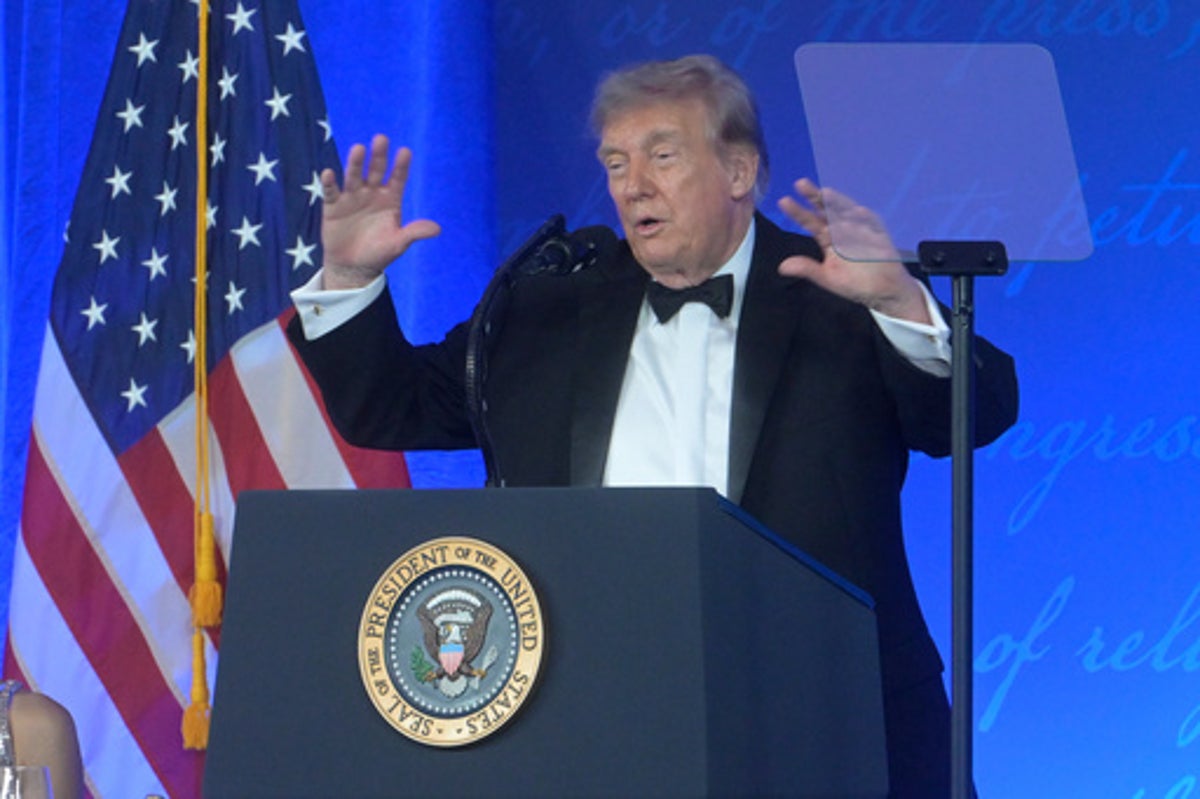
Trump demands CNN anchor smile more in ‘rambling, unhinged’ White House Correspondents’ Dinner speech
Trump bombs in WHCD return and then unleashes on CNN’s Kaitlan Collins and media in jaw-dropping hour-long rant
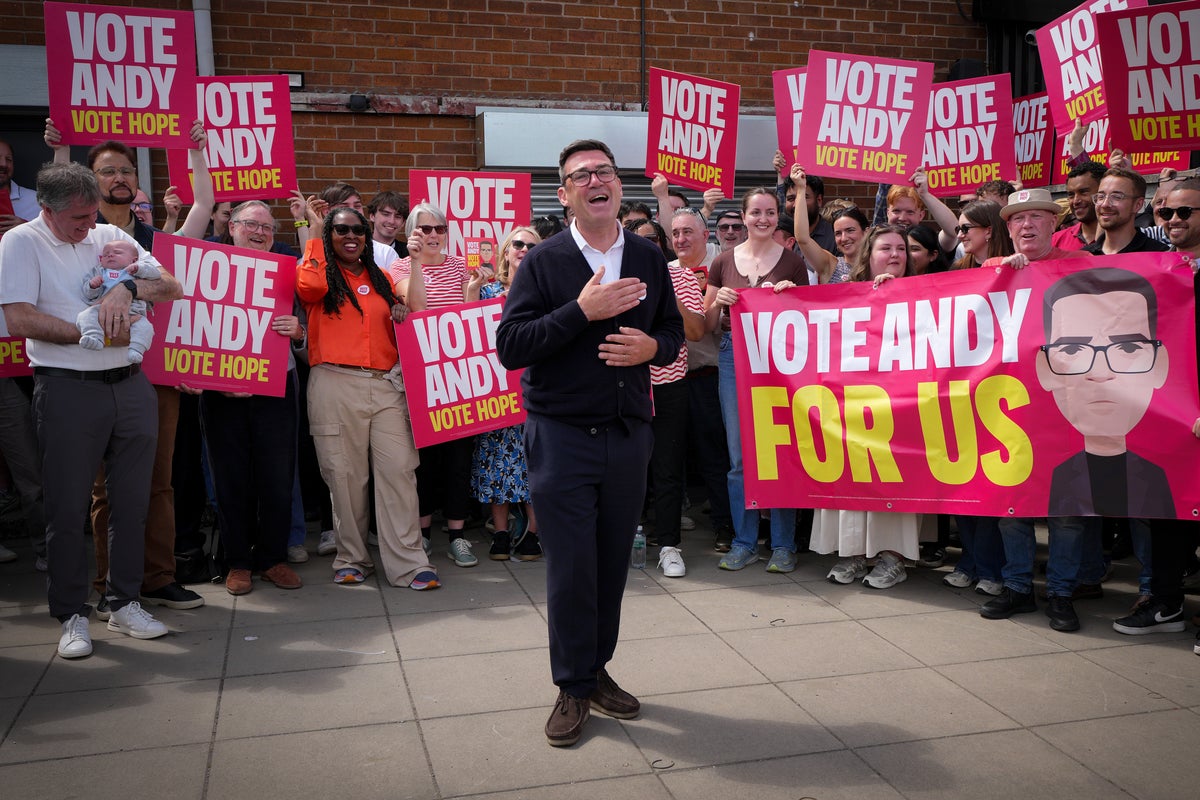
‘It’ll wind some people up’: What Burnham’s northern fixation says about his future plans
Andy Burnham’s first week as prime minister saw him appoint a very northern cabinet and ended with his first meeting at his Manchester outpost. Dan Haygarth hears from allies about what this means for the future of his government