Science Corporation’s vision-restoring chip receives EU approval
Science Corp's PRIMA retinal implant gains EU approval, marking progress in neurotech market. Aims for $100M annual revenue to prove viability. The post Science Corporation’s vision-restoring chip receives EU approval appeared first on Crypto Briefing.
Science Corporation’s vision-restoring chip receives EU approval Science Corp's new retinal implant system gets greenlight for commercialization in Europe Share Add us on Google by Editorial Team Jul. 22, 2026 Science Corporation just cleared a significant hurdle on its path to transforming healthcare technology. The company’s PRIMA retinal implant system has received the CE mark approval under the EU Medical Device Regulation.
This not only means Science Corp can commercialize its system across more than 30 European countries, but it also reaffirms their technological prowess in the field of brain-computer interfaces (BCI). Max Hodak, Science Corp’s CEO and former Neuralink co-founder, has been vocal about the crucial successes needed in this fledgling space. According to Hodak, companies should aim to generate $100 million in annual revenue to truly demonstrate their viability.
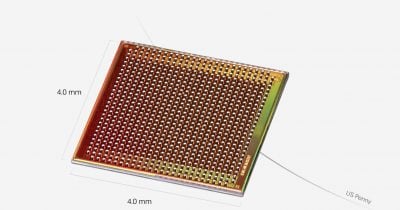
With this approval, Science Corp is positioning itself to meet and possibly exceed these expectations, marking a potential paradigm shift in how severe vision impairments are treated. The Details The PRIMA implant, born out of research from Stanford University, uses wireless photovoltaic technology to help restore central vision in patients with geographic atrophy due to age-related macular degeneration (AMD). Paired with specialized glasses, it acts like a window into the future of visual aids.
Imagine having a bionic eye that taps into your brain signals—that’s where we’re headed. Advertisement The CE mark approval came after positive outcomes from the PRIMAvera trial, with results published in the New England Journal of Medicine highlighting significant vision restoration. Science Corp is not alone in this race to the future, but this milestone sets a high bar for competitors like Neuralink.
Background Founded by a key player from Neuralink, Science Corp has deep roots in neurotechnology. The company’s journey from inception to its current $1.5 billion post-money valuation post-Series C funding round in 2026 illustrates its growth trajectory and market potential.
Raising $230 million in March 2026 was a significant boost, setting the stage for their European expansion. While crypto and blockchain haven’t intersected with Science Corp’s developments just yet, the relevance of distributed ledger technology in medical device tracking and data management can’t be understated. In the future, digital health platforms might integrate blockchain features for enhancing security and transparency.
What This Means for Investors With the CE mark approval, Science Corporation is well-positioned to flourish in the European market, which can significantly contribute to achieving the annual revenue targets Hodak mentioned. If you’re an investor, this is the kind of benchmark that hints at a buying opportunity—not just in Science Corp, but in any company leading innovation in neurotechnology. The sector itself, with players like Neuralink pushing boundaries, is ripe for disruption and innovation.
As more clinical trials turn into market-ready products, the investment pie could see exponential growth. The market is also likely to attract venture capital looking for low-risk, future-forward investments in tech-driven healthcare solutions. While connections to cryptocurrencies remain nonexistent for now, imagine a future where blockchain technology underpins medical device data transfers for such implants.
It could make these technologies not only safer but also broaden their application potential. For now, the focus remains on reaching Hodak’s $100 million revenue waypoint, a goal that seems increasingly within reach. Disclosure: This article was edited by Editorial Team.
For more information on how we create and review content, see our Editorial Policy. TECHNOLOGY Science Corporation’s vision-restoring chip receives EU approval Science Corp's new retinal implant system gets greenlight for commercialization in Europe by Editorial Team Jul. 22, 2026 Share Add us on Google Science Corporation just cleared a significant hurdle on its path to transforming healthcare technology.
The company’s PRIMA retinal implant system has received the CE mark approval under the EU Medical Device Regulation. This not only means Science Corp can commercialize its system across more than 30 European countries, but it also reaffirms their technological prowess in the field of brain-computer interfaces (BCI). Max Hodak, Science Corp’s CEO and former Neuralink co-founder, has been vocal about the crucial successes needed in this fledgling space.
According to Hodak, companies should aim to generate $100 million in annual revenue to truly demonstrate their viability. With this approval, Science Corp is positioning itself to meet and possibly exceed these expectations, marking a potential paradigm shift in how severe vision impairments are treated. The Details The PRIMA implant, born out of research from Stanford University, uses wireless photovoltaic technology to help resto
Đọc thêm từ Tiền số / Crypto

Bipartisan support ‘critical’ as Democrats push back on GOP crypto bill on ethics grounds
Latest Clarity Act draft is drawing praise from the crypto industry and criticism from Democrats and bankers, highlighting deep divisions.

UK Treasury races to solve cash barrier before tokenized bond debut
The UK Treasury has set Q1 2027 for its first tokenized sovereign bond transaction, but the project has remained dependent on finding a workable method to settle its cash leg on-chain. CoinDesk reported that the missing payment mechanism has held…

US boosts Middle East military presence amid Iran tensions
US increases military presence in the Middle East amid Iran tensions. Invasion of Iran before 2027 at 28.5% YES. The post US boosts Middle East military presence amid Iran tensions appeared first on Crypto Briefing.

$141M Fundraise to $8 Daily Fees: Movement Labs Files for Bankruptcy
The MOVE token is trading more than 99% below its all-time high of $1.45 and hit an all-time low barely two days ago.