'South Asian programmes helped us settle into our new lives'
Early South Asian programming included music and practical tips to settle into British life.
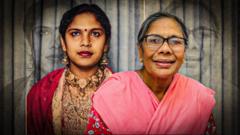
Image source, Anil Kumar Bharath / Nirmala RaniImage caption, Nirmala, pictured in the late 1970s and now, remembers one of the first TV shows for South Asians for sparking hours of conversation with her familyByAnil Kumar BharathYorkshirePublished6 minutes agoFor the first generation of South Asian migrants to the UK, dedicated radio and television broadcasts by the BBC were a lifeline.As well as lighter content such as music, the early output included practical advice to help new arrivals settle into their lives in areas such as West Yorkshire, where many South Asian families were attracted by jobs in the textile industry.Sixty years on, three generations have shared their memories of South Asian programming and spoken about how it shaped them.
Image source, Krishna Devi / BBCImage caption, Look, Listen and Speak was a landmark English language television course produced by the BBC in the late 1960s. It was primarily designed to help South Asian immigrants learn basic English, adapt to British culture, and integrate into life in the UKWhen Nirmala Rani arrived in the Leeds suburb of Hyde Park in 1979, life felt quiet and unfamiliar. She was a Punjabi speaker from India and knew few people in England.
Aged 17, Nirmala had come to Leeds to join her husband, whose family had already settled there. Like many South Asian families then, she followed relatives who had moved first to build a new life."When a letter came from home, we'd read it 10 times."
With no telephone and no relatives nearby, each letter was a lifeline.She was adjusting to a new country, new culture, and a loneliness that came from being far from the sounds and language she understood.The BBC had already begun making programmes for South Asian audiences.
One of the first, 'Apna Hi Ghar Samajhiye' (Make Yourself at Home), offered language lessons, music and advice.Image caption, Legendary Indian playback singer Asha Bhosle appearing on an early BBC programme for South Asian viewersBy the late 1960s, a magazine programme for South Asian viewers, 'Nai Zindagi Naya Jeevan', had become a weekend fixture."We'd wait the whole week to hear one Hindi song," Nirmala says.
"Music was food for our souls."Sunday mornings became something to look forward to. Families gathered around the television with homemade food."
We'd make chole puri or aloo tikki. It felt nice, everybody sat enjoying together."It got rid of the loneliness."
Image source, Amrik Chand / Anil Kumar BharathImage caption, Krishna, pictured in the early 1970s and today, recalls how early BBC programmes helped her settle into Britain at a time when language barriers made everyday life challengingThose same programmes meant just as much to Krishna Devi, who arrived in 1967 and lived in Harehills, another inner-city neighbourhood in Leeds.Krishna was also just 17 when she came from India, joining her husband and his family."It wasn't easy," Krishna says.
"We didn't understand English and they didn't understand Punjabi."One programme helped new arrivals learn the basics: 'Look, Listen and Speak', a BBC English learning series widely used at that time."They used to teach us word by word.
They taught us how to cross the road. Look left, right."Even simple tasks could feel unfamiliar."
When I went to the shops, I didn't know how much things cost. I'd put the money out on my hand and let the shopkeeper take however much it was."Like Nirmala, the programme she looked forward to most was Nai Zindagi Naya Jeevan."
There was one Hindi song in that half hour. We waited for it."Asked why those songs mattered so much, her answer is simple."
Because it was our language. That half hour made us forget everything else."Her Sundays followed a familiar pattern: chai, parathas and three generations gathered around a television.
Image source, Anita BhallaImage caption, Anita worked to ensure Asian broadcasting wasn't a "ghetto slot", helping young presenters move into wider BBC rolesExperiences like Krishna's were shared in living rooms across the country, but inside the BBC, broadcaster and Asian Network pioneer Anita Bhalla was pushing for something more than comfort. She wanted representation, and a voice."When I started, we didn't exist," she says.
"There was nobody like me, except in the specialist programmes."Those early shows mattered because they were the only place migrant families could see or hear anything familiar."There was nothing else where people could connect with home, with language, culture, anything."
She later helped shape the early Asian Network in the late 1980s."We were no longer new arrivals. We were integrated communities.
So, what was our voice? That's what we were trying to find."She pushed for South Asians not just on screen, but behind it."
Where were the people behind the scenes? That's where the real power was."Reflecting on young South Asians entering the industry today, she says: "I hope their ambitions aren't capped.
They should be everywhere."Image source, Yasmin ShabirImage caption, Yas
Đọc thêm từ Thế giới

독일 성소수자 행사 테러 용의자 사살…‘IS 가담 시도’ 이력
본문국제유럽독일 성소수자 행사 테러 용의자 사살…‘IS 가담 시도’ 이력천호성기자수정 2026-07-27 09:11펼침0:00Your browser does not support theaudio element.구글 선호 매체 등록25일 독일 수도 벨를린에서 차량 돌진 테러를 벌인 용의자 압둘 발루트(21)의 사진.
![[뷰리핑] 김민석·정청래 ‘신천지’ 공방 격화](https://flexible.img.hani.co.kr/flexible/normal/300/180/imgdb/child/2026/0727/53_17851113760417_20260727500409.webp)
[뷰리핑] 김민석·정청래 ‘신천지’ 공방 격화
본문정치정치일반[뷰리핑] 김민석·정청래 ‘신천지’ 공방 격화수정 2026-07-27 09:17펼침0:00Your browser does not support theaudio element.구글 선호 매체 등록 진행: 하어영 한겨레 정치팀 기자. 출연: 강수영 변호사, 김보미 전 전남 강진군의회 의장, 김원철 한겨레 워싱턴 특파원30대, 여성, 원외 평당원 당대표 도전, 김보미를 만나다/민주당 전당대회 전망은?

Korea must help reinforce nuclear umbrella
A recent Foreign Affairs article by Jennifer Lind and Daryl G. Press, "The Broken Nuclear Umbrella," has reignited a debate on a decision South Korea can no longer afford to postpone. Their central argument is unsettling but difficult to dismiss: As adversaries acquire the abilit

Nvidia in talks with OpenAI to guarantee $250 bil. financing for data center, WSJ reports
Nvidia is in talks to provide a roughly $250 billion backstop for OpenAI as part of a massive data center project, The Wall Street Journal reported on Sunday. The guarantees from Nvidia would help the ChatGPT maker lease a 10-gigawatt project that SoftBank’s energy subsidiary is