Tether funded both sides of its own chain war
The world’s largest stablecoin issuer pays roughly $2.9 billion a year in fees to blockchains it does not control. Its answer was to back two competing chains at once: Plasma, the $373 million DeFi-flavored bet, and Stable, the enterprise rail…
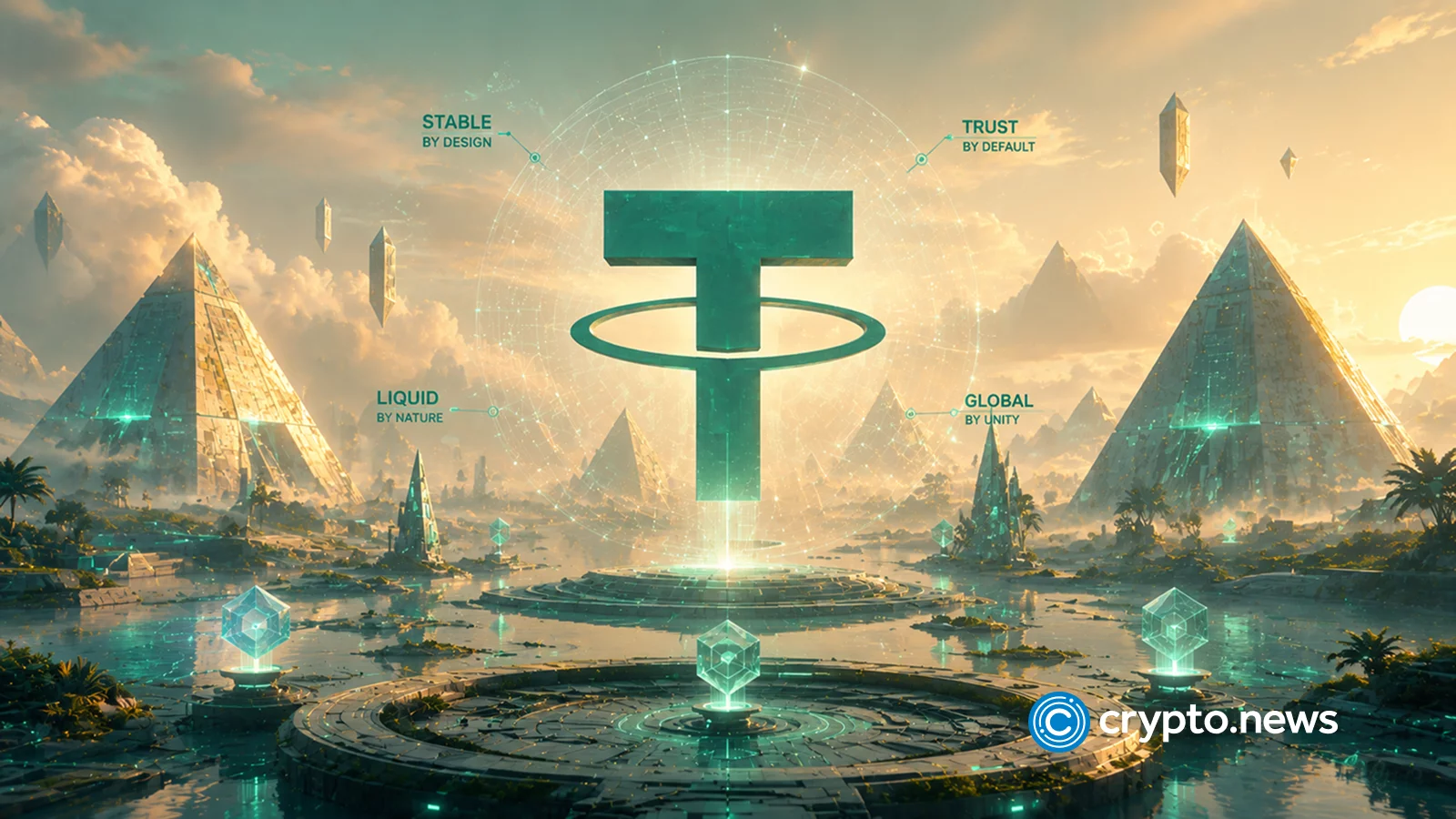
Share Link copied The world’s largest stablecoin issuer pays roughly $2.9 billion a year in fees to blockchains it does not control. Its answer was to back two competing chains at once: Plasma, the $373 million DeFi-flavored bet, and Stable, the enterprise rail where USDT is the gas.
One issuer, two armies, one enemy named Tron, and a strategy that makes sense only when you see whose problem it solves. Summary Tether’s ecosystem has seeded two purpose-built USDT chains that compete directly with each other: Plasma, live since September with a $373 million token sale, a paymaster model, and roughly $551 million in DeFi TVL, and Stable, live since December with $2 billion in pre-deposits, USDT-as-gas, and an enterprise focus. The motive is a number: analyses put Tether’s annual network-fee bill near $2.
9 billion, split largely between Ethereum and Tron, value that leaks to base layers the issuer does not control while its own revenue runs near $5 billion. The two chains embody opposite design philosophies, a subsidized general-purpose DeFi economy with a native token doing traditional work, versus a stripped payments rail where the dollar itself is the fuel, and opposite go-to-market strategies. The real target is not each other but Tron, which still carries roughly 45% of all USDT and earns the fees on the world’s largest remittance flows, a moat neither challenger has meaningfully dented.
Funding both sides is not indecision; it is a portfolio: the issuer wins if either chain repatriates the fee leak, wins bigger if both segment the market, and loses only to the status quo it is paying $2.9 billion a year to escape. Companies do not usually finance both armies in a war, but then no company has ever been positioned quite like Tether.
The issuer of USDT sits atop the most profitable simple business in finance, collecting Treasury yield on the reserves behind roughly $150 billion of circulating dollars, and it watches, every day, a substantial slice of its ecosystem’s economics leak sideways: the fees users pay to move USDT accrue not to Tether but to the blockchains USDT lives on, a bill that research houses have tallied near $2.9 billion a year, flowing mostly to Ethereum validators and, above all, to Tron, the chain that quietly became the developing world’s dollar-remittance backbone. Tether’s response, characteristically, was not one bet but two.
Plasma, backed by Tether-adjacent capital and Founders Fund, raised $373 million in an oversubscribed sale and launched in September as a general-purpose stablecoin chain with a native token, a paymaster that makes USDT transfers free, and a DeFi ecosystem that onboarded Aave, Ethena, and Euler on day one. Stable, backed by Bitfinex with Tether’s chief executive advising, drew $2 billion in pre-deposits and launched in December as something sparer: a chain where USDT itself is the gas, transfers are free by protocol rule, and the pitch is enterprise blockspace rather than yield farming. Bitfinex-backed layer 1 Stable releases tokenomics, mainnet to go live on Dec.
8Stable shares tokenomics details ahead of its Dec. 8 mainnet launch, with a total supply of 100B tokens distributed among ecosystem, team, investors and advisors.— crypto.
news (@cryptodotnews) December 3, 2025 Two chains, one family, the same target market, and a rivalry the ecosystem politely declines to name. This piece names it, maps the two designs honestly, and answers the question the arrangement raises: why an issuer would fund its own chain war, and what winning even means when you own both sides. The fee leak: the war’s actual cause Start with the number that explains everything, because without it the two-chain strategy looks like a waste and with it the strategy looks obvious.
USDT’s success created a strange corporate geometry: the asset is Tether’s, the activity is enormous, and the toll booths belong to other people. Every USDT transfer on Ethereum pays gas to Ethereum validators; every transfer on Tron, where nearly half of all USDT lives and where the remittance corridors of Asia, Africa, and Latin America actually run, pays energy and bandwidth costs into Tron’s economy. Aggregated, analyses of Tether’s ecosystem have put the annual network-fee spend associated with USDT movement at roughly $2.
9 billion, against issuer revenues that industry estimates placed near $4.9 billion in the same period, meaning the base layers underneath USDT capture value at a scale approaching the issuer’s own take. You might also like: CLARITY Act faces Senate vote despite 60-vote gap Delphi Digital’s framing of the problem is the cleanest: as issuance spread across chains, the infrastructure supporting USDT ended up largely outside Tether’s control, and the economic value generated by usage is disproportionately captured by the rails, especially Ethereum and Tron.
For most companies this would be an irritation. For a stablecoin issuer, it is a strategic vulnerability with three faces. Economically, it is m
Đọc thêm từ Tiền số / Crypto

Iran reports Ukrainian drone strike killed sailor on Caspian Sea vessel
Ukrainian drone strikes in the Caspian Sea killed a sailor on an Iran-linked vessel, escalating conflict risks for energy markets and crypto The post Iran reports Ukrainian drone strike killed sailor on Caspian Sea vessel appeared first on Crypto Briefing.

Charles Hoskinson: Ethereum Is Copying Cardano’s EUTXO Model Without Credit
Cardano founder Charles Hoskinson has yet again accused Ethereum developers of adopting Cardano’s Extended Unspent Transaction Output (EUTXO) architecture after an Ethereum Foundation researcher proposed a new native UTXO payment model recently. A New Ethereum Proposal Reignites
Trump Reportedly Halts Planned Attacks on Iran: How Will BTC React?
BTC is marginally up since the news went live, but the actual volatility has historically taken place on Monday morning.

Trump considers resuming full-scale war with Iran, sending Bitcoin down and crypto sanctions into overdrive
Trump considers resuming full-scale war with Iran, rattling Bitcoin prices and intensifying crypto sanctions on Iranian exchanges like Nobitex. The post Trump considers resuming full-scale war with Iran, sending Bitcoin down and crypto sanctions into overdrive appeared first on C