The fruit that connects 200 years of Australian history
A Short History of Longans is a historical novel that spans two centuries of an Irish-Chinese family in Australia.
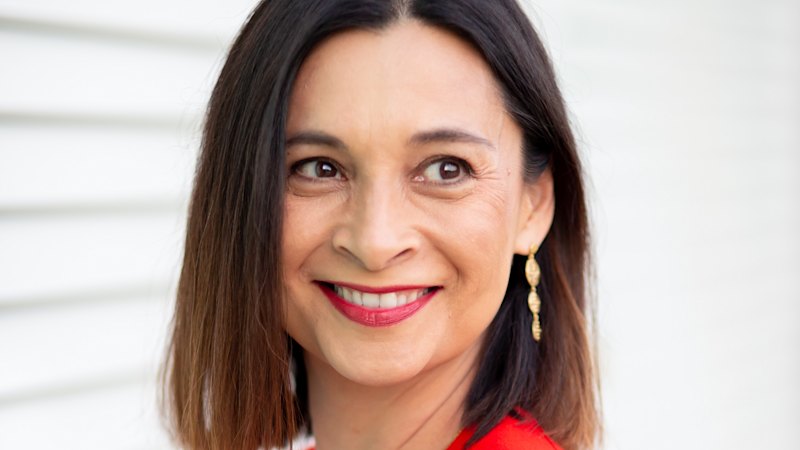
A Short History of Longans is a historical novel that spans two centuries and follows the twisted branches of an Irish-Chinese family in Australia. Mirandi Riwoe’s latest book, her sixth, explores similar themes tackled in her previous works: cross-cultural identities, interracial relationships, immigration, racism and colonial history. Following a preface about a Chinese bushranger named Ah Yang, the novel is divided into four seasonal sections, each helmed by one of his successors.
This multigenerational saga begins at the end. Its reverse chronology opens in the near future, in winter 2049, when elderly Daniel finds his beloved longan tree toppled by a storm. It seems like an apt metaphor for his own life, as he fears a “shambolic, exhausting sprint to the finish line – a race that he somehow finds himself ill-equipped for”.
He has long lived alone, but his solitude is disrupted by a widowed neighbour, Olivia Quong, who is piqued with curiosity by the dusty, red-lacquered altar in his house. This neglected heirloom once belonged to Daniel’s late father and offers a clue as to his distant Asian ancestry. So indeed does his cat, who is named after a Chinese emperor, despite Daniel’s general indifference towards his family history.
He used to be a carpenter; now he potters around, creating sculptures from mosaics of inherited letters, photos and crockery. He finds satisfaction in reassembling these shards into new formations, and also likes the shape he’s becoming through his slowly growing friendship with Olivia. But his peace is broken when a stranger turns up, requesting that Daniel delve into his shameful past.
Before we can find out more about this mystery, Riwoe ends the section. This abrupt closure may dismay readers who are primed for narrative resolution, or at least for more information, but the author has jumped even further back in time. The second section settles in autumn on New Year’s Day in 2000, and focuses on another branch of the family tree.
Like Daniel, Wendy is also of advanced years, but aside from the usual physical ailments, she’s experiencing early onset dementia. Unlike Daniel, who was busy cutting up his family’s paraphernalia for his art projects, Wendy is an aspiring writer trying to bring together pieces of her Irish immigrant forebears to document them. However, her “honeycomb” brain, with its gaps in memory, makes research difficult.
Riwoe writes perceptively about this collapse of time: “The multiplying particles of herself – child, adolescent, adult, demented woman – assembling, competing, squirming, for room beneath her skin.” The narrative then jumps back another 60-odd years, leaving Queensland behind to follow Ruby in Los Angeles. She’s a Chinese-Australian actress chasing the American dream in the 1940s.
The nuances of race are particularly potent in this section. Ruby has missed out on playing Shakespearean heroines because her complexion was “too dusky, as usual”. And yet, she’s found a way to take advantage of her mixed ancestry, leaning into the market’s proclivity for fetishising “Orientalists” by changing her surname to her mother’s “Wong”and preparing lectures about “the usual spiel about Chinese recipes and superstition …”
even though she’s never been to China. The final section of A Short History of Longans loops us back to the start and explains how the bushranger Ah Yong inadvertently planted the seed for this mixed-race family tree. This last segment includes a cacophony of voices from extended members of the clan, but it’s primarily the story of Maria Barrett, an 18-year-old Irish pauper who arrives in Australia at the turn of the century.
It’s appropriately set in spring, a time of birth and beginnings. The novel moves adeptly between each family member; in terms of time and place and social norms, the world-building for these varied and disparate characters has been meticulously researched. With her Eurasian background, a mix of Chinese-Indonesian and Irish-English heritage, Riwoe knows what it’s like to straddle cultures, to live as racially bifurcated: divided and wholly of neither east nor west, but a brew of both.
Her lived experience informs her books and offers verisimilitude to the stories. The longan, a fruit native to South-East Asia, with its historical cultivation dating back to China, appears in all four sections of the book as a linking motif. Though the bloodline flows through the chapters, sometimes the connection between them may feel tenuous, and each quarter can pass as a short story or the beginning of a novella and be read as a discrete unit on its own.
But together they present a beguiling, detail-rich narrative that tracks the fortunes and fates of several generations, replete with secrets and lies, but also with hope. At the end of Daniel’s narrative, there’s a discovery of infant longan leaves in his garden. These slender saplings, offspring of the destroyed parent plant, look to the future.
What else is happening in the book wor
Đọc thêm từ Thế giới
Moriyasu to coach Japan at Asian Cup: media
Hajime Moriyasu has signed a new deal to coach Japan at next year's Asian Cup, after taking them to the knockout stage at the World Cup, local media…

Bombers’ Brown looks for another win under centre
Dru Brown hopes to keep the good times rolling.
トランプ政権 新追加関税を発動へ 日本は既存税率あわせ12.5%
アメリカのトランプ政権が日本を含む幅広い国や地域に課している10%の追加関税が日本時間の24日午後1時すぎに失効する見通しです。これを前にトランプ政権は23日、日本を含む主要な60の貿易相手の国や地域に、新たに追加関税を課すと正式に発表しました。
Pakistan's US funding push after Iran war role draws skepticism from economists
Pakistan's push to convert some of its diplomatic goodwill with the Trump administration into economic support has drawn skepticism from economists, who say fresh financing will do little…