Microsoft CEO warns businesses relying on single AI may fail
Nadella's warning highlights the risk of AI dependency, urging businesses to invest in proprietary AI to maintain competitive advantage. The post Microsoft CEO warns businesses relying on single AI may fail appeared first on Crypto Briefing.

Photo: Briansmale / Wikimedia Commons / CC BY-SA 4.0 (https://creativecommons.org/licenses/by-sa/4.
0) Microsoft CEO warns businesses relying on single AI may fail Satya Nadella's push for multi-model AI strategies echoes the decentralization thesis that crypto builders have championed for years Share Add us on Google by Editorial Team Jul. 27, 2026 Satya Nadella just said the quiet part out loud. Businesses that go all-in on a single AI provider are setting themselves up to lose their competitive edge, their proprietary knowledge, and eventually their survival.
The Microsoft CEO’s warning, delivered in a post on June 14, cuts to a tension that’s been simmering across enterprise tech: the more you feed your data into someone else’s AI model, the smarter that model gets, and the dumber your organization becomes relative to everyone else using the same system. In English: you’re paying to train your competitor’s brain. The “paying twice” problem Nadella’s argument is straightforward and kind of brutal.
Enterprises that rely on frontier AI labs like OpenAI or Google end up paying twice. Once for the token usage itself, and again by surrendering the proprietary knowledge baked into every query, every workflow, every interaction. Those AI providers then absorb that operational know-how, improving their models for everyone, including your rivals.
The specialized expertise that once made a company valuable gets commoditized. Advertisement Nadella’s proposed antidote is what he calls “token capital,” which refers to custom AI capabilities that layer on top of a company’s existing human expertise rather than replacing it wholesale. The idea is that firms should build proprietary AI environments, ideally on platforms like Azure (naturally), instead of outsourcing their intelligence to a handful of model providers.
Microsoft reported capital expenditures of $37.5 billion in a single quarter by early 2026, part of roughly $80 billion committed in FY2025 to AI data center infrastructure. Nadella’s vision of enterprises running multi-model strategies on their own terms conveniently runs through Microsoft’s cloud platform.
Why crypto builders are nodding along Nadella’s rhetoric about avoiding concentration of AI power within a few companies, promoting data sovereignty, and building decentralized frameworks sounds remarkably familiar to anyone who’s spent time in crypto. Back in 2019, Microsoft Research investigated decentralized AI collaboration via blockchain, specifically looking at shared model architectures running on Ethereum. That research didn’t produce a flagship product, but it signaled awareness that the AI centralization problem might eventually need crypto-native solutions.
Nadella himself stated that public tolerance for a future dominated by a handful of AI models will be minimal, advocating instead for broader economic benefits. What this means for investors For traditional tech, Nadella’s warning could accelerate enterprise spending on bespoke AI infrastructure rather than simple API subscriptions to frontier models. That benefits cloud platforms and niche firms specializing in customizable AI tooling.
The more immediate opportunity may sit at the middleware layer: projects that help enterprises maintain data sovereignty while interacting with multiple AI models, potentially using cryptographic verification, zero-knowledge proofs, or token-gated access controls. These are the tools that would make Nadella’s multi-model vision work without requiring companies to build everything from scratch. Disclosure: This article was edited by Editorial Team.
For more information on how we create and review content, see our Editorial Policy. TECHNOLOGY Microsoft CEO warns businesses relying on single AI may fail Satya Nadella's push for multi-model AI strategies echoes the decentralization thesis that crypto builders have championed for years by Editorial Team Jul. 27, 2026 Share Add us on Google Photo: Briansmale / Wikimedia Commons / CC BY-SA 4.
0 (https://creativecommons.org/licenses/by-sa/4.0) Satya Nadella just said the quiet part out loud.
Businesses that go all-in on a single AI provider are setting themselves up to lose their competitive edge, their proprietary knowledge, and eventually their survival. The Microsoft CEO’s warning, delivered in a post on June 14, cuts to a tension that’s been simmering across enterprise tech: the more you feed your data into someone else’s AI model, the smarter that model gets, and the dumber your organization becomes relative to everyone else using the same system. In English: you’re paying to train your competitor’s brain.
The “paying twice” problem Nadella’s argument is straightforward and kind of brutal. Enterprises that rely on frontier AI labs like OpenAI or Google end up paying twice. Once for the token usage itself, and again by surrendering the proprietary knowledge baked into every query, every workflow, every interaction.
Those AI providers then absorb that operational
Đọc thêm từ Tiền số / Crypto

US Senate delays Crypto Clarity Act, leaving bill’s future uncertain
The delay in the Crypto Clarity Act's consideration heightens regulatory uncertainty, potentially stalling digital asset market growth. The post US Senate delays Crypto Clarity Act, leaving bill’s future uncertain appeared first on Crypto Briefing.

Kalshi and Polymarket win injunction against Minnesota prediction market ban
The injunction highlights ongoing tensions between state and federal authority over prediction markets, potentially influencing future regulations. The post Kalshi and Polymarket win injunction against Minnesota prediction market ban appeared first on Crypto Briefing.

Nvidia is using OpenAI’s Ilya Sutskever to loosen Google’s grip on elite AI research
Nvidia (NASDAQ: NVDA) is putting money and hardware behind Safe Superintelligence, the lab started by former OpenAI chief scientist Ilya Sutskever. The deal gives Ilya more access to Nvidia’s graphics chips and cuts the lab’s earlier dependence on processors from Alphabet’s Googl
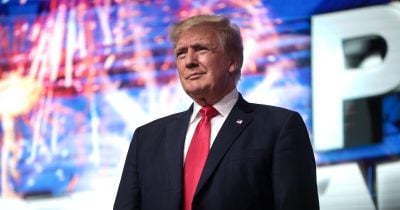
Gold holds gain as Trump sounds optimism over US-Iran talks
Gold's stability amid U.S.-Iran talks optimism highlights its role as a hedge against geopolitical and economic uncertainties. The post Gold holds gain as Trump sounds optimism over US-Iran talks appeared first on Crypto Briefing.